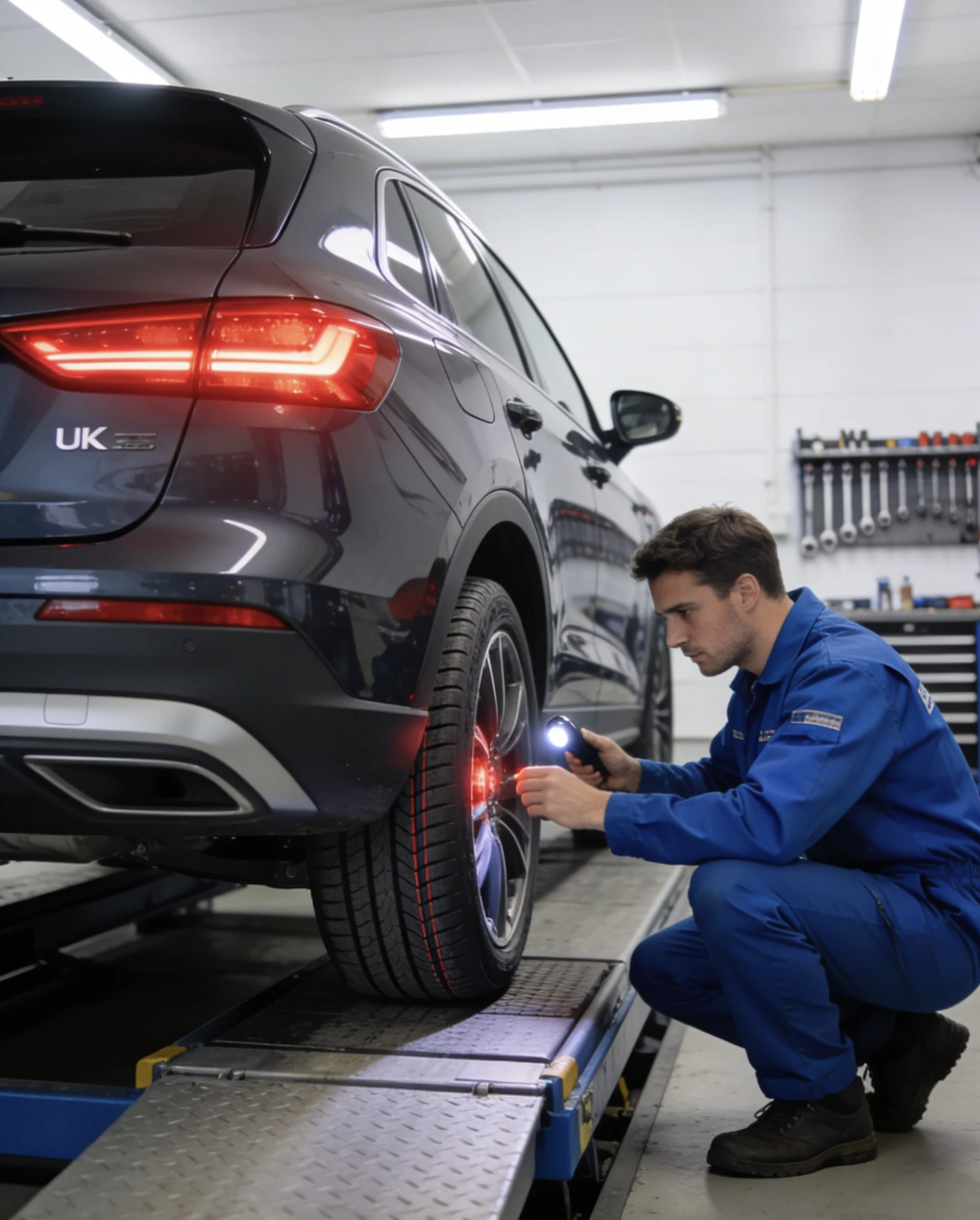
An MOT failure often feels worse than it really is. Drivers hear the word fail and immediately imagine a serious mechanical problem, a large bill, and a car that has become unsafe overnight. In reality, many MOT failures come down to faults that are familiar, predictable, and often preventable.
That is important to understand because it changes the way you prepare. Instead of treating the MOT as a mystery, you can see it for what it is. It is a roadworthiness check with a well known set of pressure points. Lights fail. Tyres wear out. Brakes lose efficiency. Wipers stop doing their job properly. Warning lights appear. None of that is unusual, and none of it should feel like a personal disaster.
For anybody searching MOT test Peterborough or MOT Peterborough, the useful question is not what if my car fails but what tends to catch drivers out most often. Once you know that, you can reduce the odds of walking into the same avoidable problems.
A surprising number of failures begin with something as simple as a bulb. It sounds minor because it is minor, but that is exactly the point. When a car fails on something easy, it feels frustrating because it could have been dealt with in minutes.
The issue is not only headlights. It can be brake lights, indicators, reversing lights, rear fog lights, or the number plate light. Many drivers assume they would notice a bulb failure straight away, but that is not always true. You may not see the rear lights when driving, and unless someone tells you, the fault can go unnoticed for weeks.
This is why a proper light check before the appointment is one of the smartest things you can do. Ask somebody to stand outside the car while you work through the lights, or use a reflective surface if you are checking alone. It is simple, quick, and worth doing every time.
Tyres are one of those parts that drivers know they should watch, yet plenty still leave them until they are clearly near the limit. Part of the reason is that tyres wear gradually. You get used to how they look, and unless there is obvious damage, it is easy to assume they are fine.
The legal tread depth matters, but it is not the only thing to think about. Uneven wear, cuts, sidewall damage, and bulges are all problems. Tyres can also wear in a way that points to something else, such as alignment or suspension issues. If one edge is disappearing faster than the rest, the tyre is telling you a story.
Road conditions do not help. Potholes, kerb impacts, and patched road surfaces can all damage tyres in ways that are not immediately dramatic. You may not get a puncture, but the tyre may still no longer be in a condition that belongs on a roadworthy vehicle.
Brake wear usually gives drivers some warning. The car may take a little longer to stop. The pedal may feel different. There may be a squeal, a grinding sound, or a weak handbrake. The problem is that people often adjust to these changes gradually.
That is why brakes are such a common issue at MOT time. The deterioration has been happening for weeks or months, but because the vehicle still stops, it has not felt urgent enough to address. Then the test puts it under proper scrutiny and the car fails on brake efficiency, wear, or handbrake performance.
This is a good example of why listening to the car matters. A small change in braking behaviour is not something to file away for later. It is information. The earlier you act on it, the easier it usually is to deal with.
Modern vehicles are full of systems that monitor what the car is doing. That can be useful, but it also means many faults now announce themselves with a warning light long before a driver notices any change in how the vehicle behaves.
A lot of people fall into the trap of assuming that because the car still drives, the light cannot be that serious. That is not a safe assumption. Some lights point to issues that affect emissions, braking, or another safety related system. Those are exactly the types of concerns that matter at MOT time.
The sensible response is not to panic at every light. It is to avoid guessing. A proper diagnostic check can tell you whether the fault is minor, whether it needs attention before the test, and whether it points to a wider repair need. That is far better than hoping the warning disappears and takes the problem with it.
Wipers, washers, and the condition of the windscreen often sound unimportant when the weather is dry. The trouble is that poor visibility does not always reveal itself until the conditions are bad, and that is when the fault suddenly becomes obvious.
Wipers that smear, skip, or leave sections of glass untouched are not just annoying. They are unsafe. A chip in the wrong place on the windscreen may seem minor until it sits directly in the driver’s line of sight. A washer bottle that has been left empty for weeks becomes a problem the first time road grime covers the screen.
These are exactly the sorts of things drivers mean to sort out later. The better approach is to treat them as routine maintenance. Fresh wiper blades, a clean windscreen, and working washers are basic but important.
There is a pattern to many MOT failures. The issue itself is not always major, but the delay in dealing with it creates unnecessary hassle. That is why so many people end up saying they wish they had had the car checked a little earlier.
A worn tyre discovered two weeks before the MOT is easy to replace. The same tyre discovered on the day can lead to a failure, lost time, and another booking to think about. A warning light looked at in advance may turn out to be straightforward. Left until the test, it becomes another source of uncertainty.
That is why useful preparation is not about obsessing over every detail. It is about catching the clear, common faults before they decide your timetable for you.
The best way to avoid common MOT failures is not complicated. It starts with paying attention to the vehicle, doing the obvious checks, and taking changes in behaviour seriously.
Check the lights properly. Inspect the tyres. Test the wipers and washers. Be honest about the brakes. Do not ignore warning lights. If the car feels different, sounds different, or shows you something new, deal with it while the timing is still yours to control.
Many drivers also benefit from having the car looked over before the MOT if they already suspect something is wrong. That can be especially useful where symptoms overlap, such as a warning light combined with rough running, or uneven tyre wear combined with vague steering.
In those situations, there is no value in guessing. Clear information is what saves money, not blind optimism.
It helps to stop seeing the MOT as a yearly judgment and start seeing it as a structured check on the condition of the car. The test is not trying to catch people out. It is highlighting whether the vehicle is still meeting the standard it should meet.
When you look at it that way, preparation becomes more practical. You are not trying to beat the system. You are simply making sure the obvious faults have not been left to drift.
That mindset tends to reduce stress because it turns the process into something manageable. Drivers who get better outcomes are usually not the ones with perfect cars. They are the ones who respond to problems before the appointment rather than after it.
Most MOT failures are not random. They are the result of common faults that develop slowly and are easy to postpone. That is actually good news because it means many failures can be avoided with a bit of attention and sensible planning.
If your annual test is coming up, focus on the basics first. Look at the things that fail most often. If anything feels off, get it checked. If the car seems sound, go into the appointment knowing you have already done what you reasonably can.
That is the difference between hoping for a pass and preparing for one.